
Building your own document automation means maintaining multiple OCR and LLM integrations — and still not knowing if accuracy is improving. Invofox unifies everything in one platform with continuous learning and measurable accuracy.
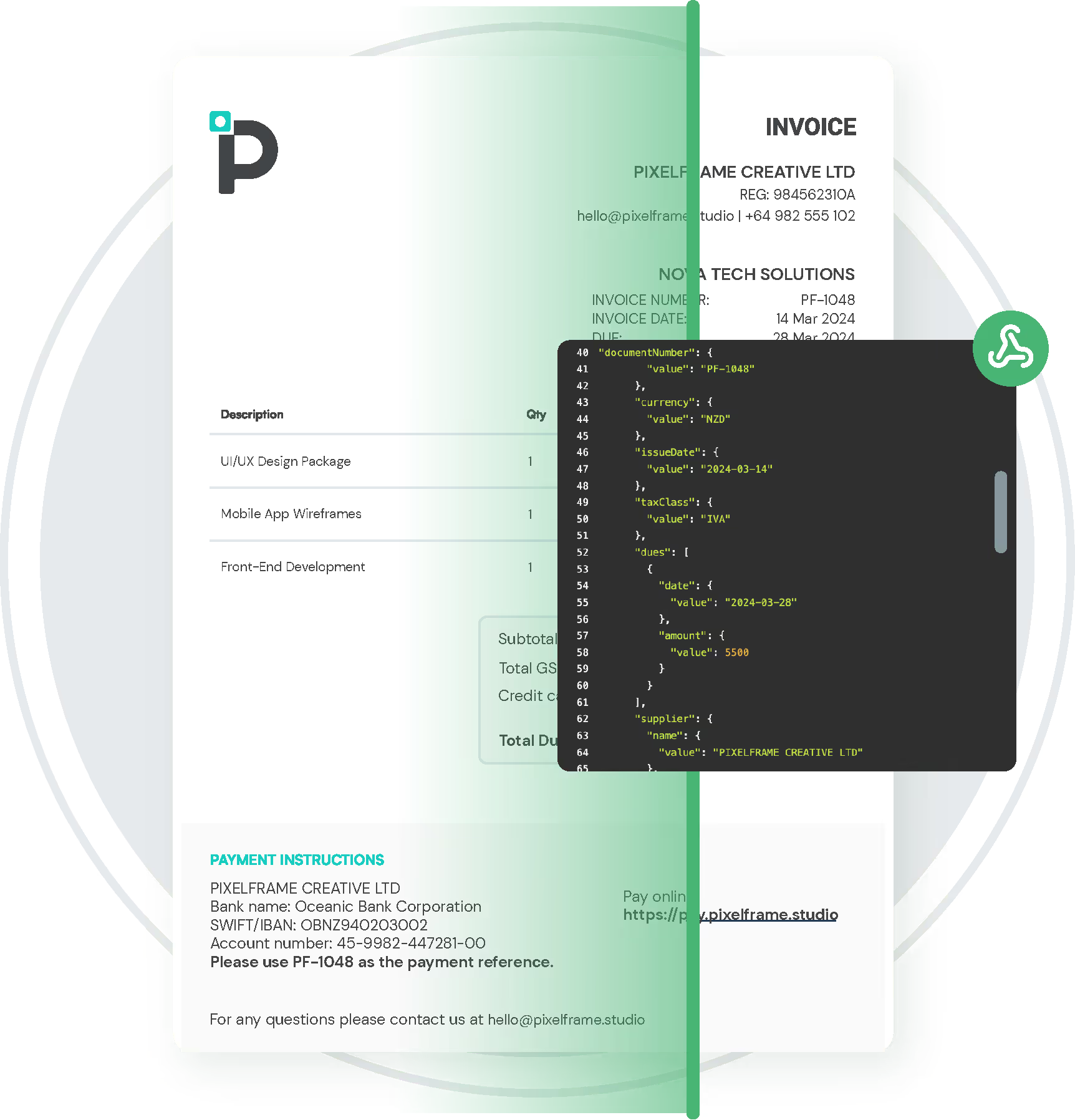
One endpoint, one webhook, and a true API-first architecture.

Ingestion, splitting, classification, parsing, extraction, validation, and delivery all flow through a single endpoint and webhook — no pipeline to build or maintain.

Know what works, what doesn’t, and what’s improving. Accuracy, latency, and stability are measured automatically, giving you full visibility without extra tooling.

Feedback powers Invofox’s few-shot, RAG, and fine-tuning processes, ensuring the model adapts to your documents and continuously improves.

An API gateway handles rate limits and provider availability behind the scenes, so your extraction stays fast and stable.
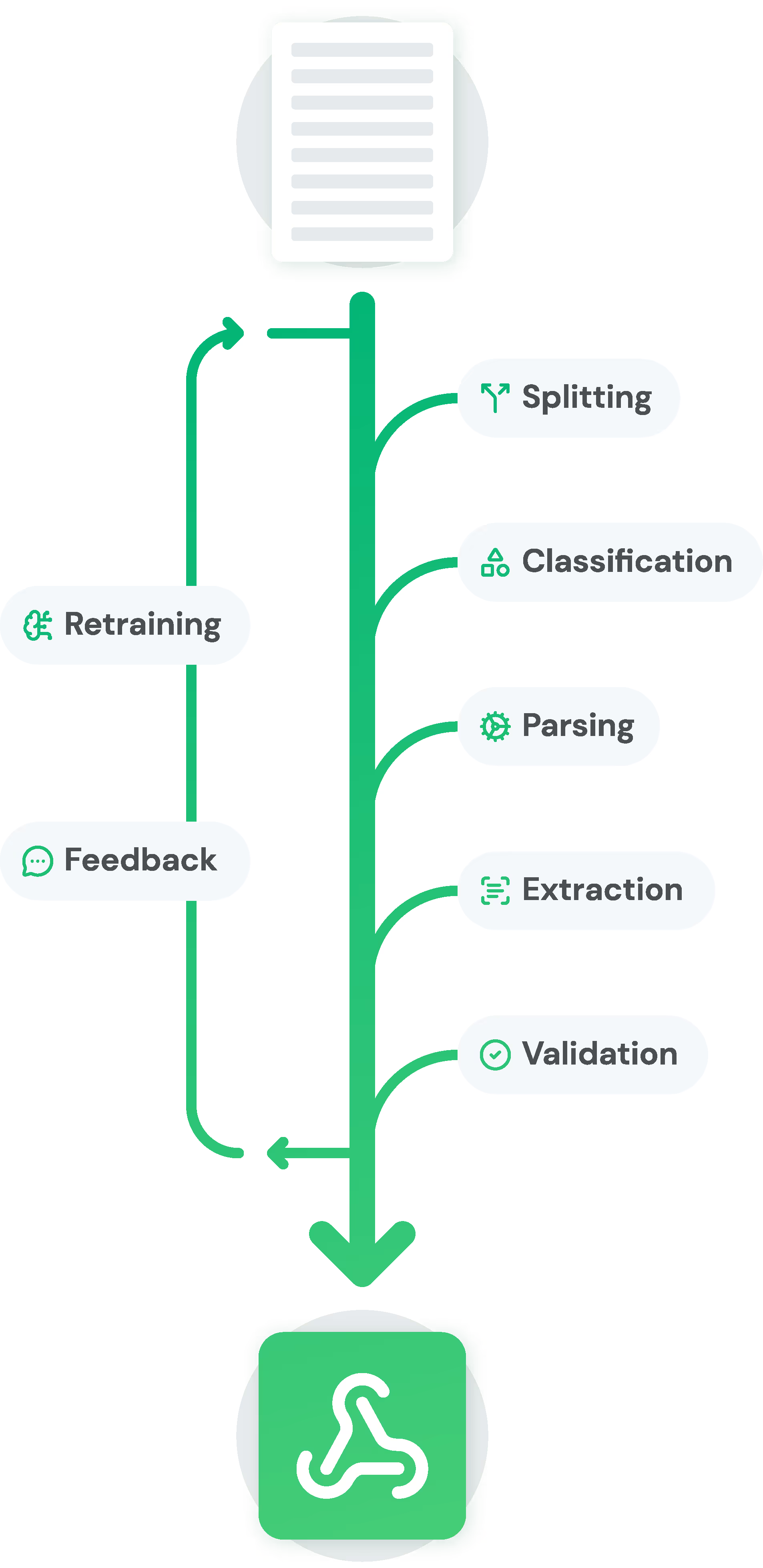
Documents — invoices, mortgage files, financial, and other document type — come in every format imaginable. Even when teams connect multiple OCR and LLM vendors, accuracy is inconsistent — and without proper monitoring and measuring, it’s impossible to know which setup performs best or whether results are actually improving over time.
Here’s what teams underestimate when they try to build internally.


These are the same challenges Invofox already solves without requiring you to build and maintain vendor integrations or manually track model accuracy over time.
Most teams start with good reasons: control, customization, and perceived cost savings. But internal builds quickly turn into fragmented pipelines, unpredictable accuracy, and no reliable way to measure improvements or prevent quality regressions — and even if you do make it work, you’ll spend hundreds of engineering hours and lose focus on the product you’re actually trying to ship.


Schedule a custom demo with our team and we’ll show you how Invofox works using your own documents — so you can see exactly how Invofox combines multiple OCR and LLM vendors for accuracy you can measure.
Building in-house can make sense for highly specialized cases or IP-sensitive systems. But most teams lose time maintaining integrations, debugging models, and guessing whether accuracy is improving.
Invofox gives you what you need most — a unified system that integrates with any vendor, improves automatically, and proves it with metrics.
It’s how teams achieve higher accuracy, faster results, and measurable savings compared to building in-house.





Start parsing and structuring complex documents with accuracy that keeps improving — without rebuilding from scratch.


