
Process sensitive documents with immediate deletion — no storage, no reuse, no residual data retained.
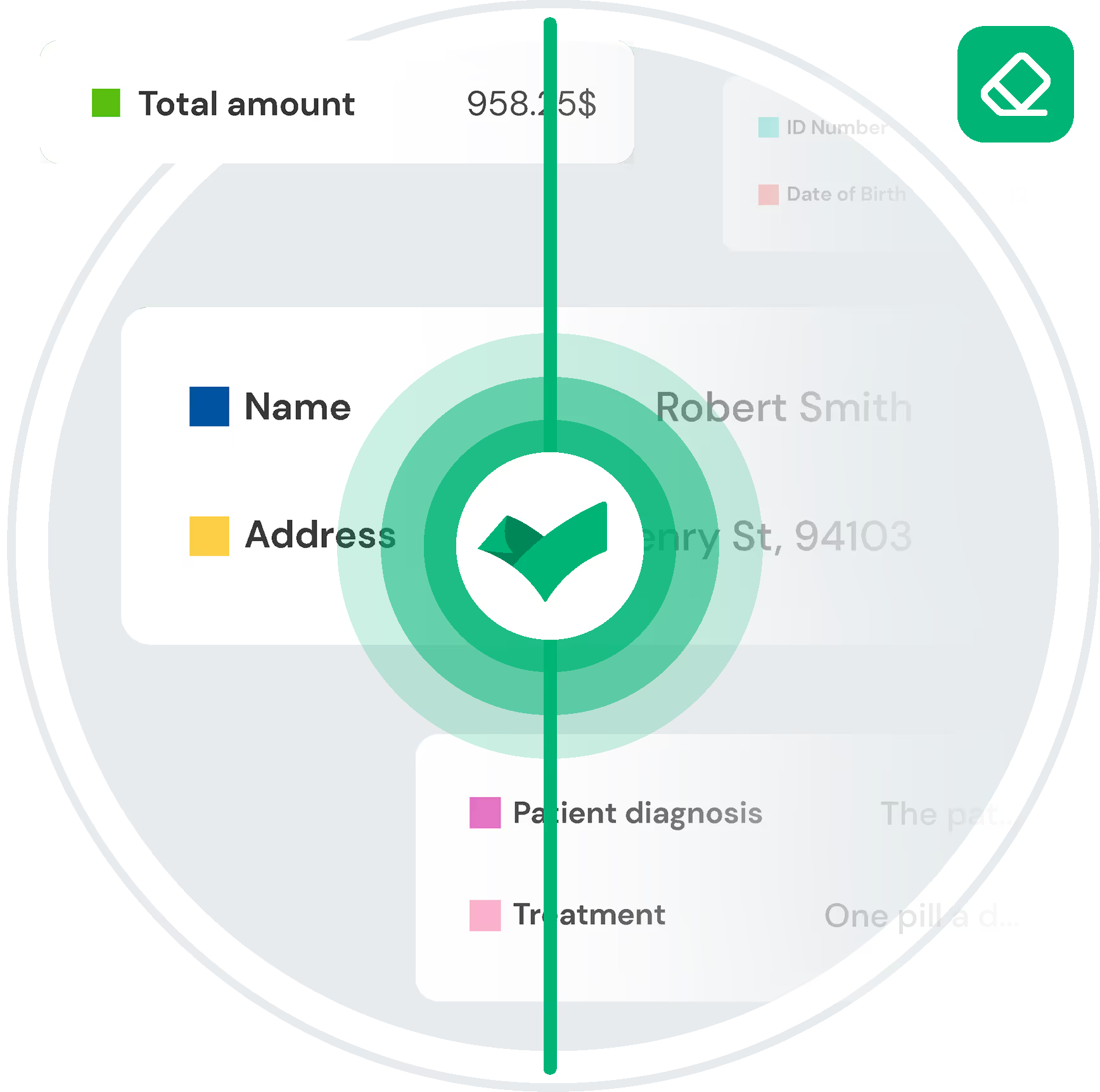
By default, Invofox retains processed documents and extracted data for a defined period. This approach is intentional and fully compliant with the regulations in the markets we operate in.
Data retention enables accuracy and performance improvements while maintaining strict security and compliance standards.
It allows us to:

Improve extraction accuracy over time

Support auditing and short-term reference needs
For most customers, this balance delivers better outcomes while meeting data protection and security requirements.
Zero retention builds on this foundation by applying stricter guarantees when workflows require them.
Some workflows require stronger guarantees than standard retention.
In certain environments, organizations must ensure that documents are never stored after processing — even temporarily. This is not a regulatory requirement, but a one driven by internal policy, regulatory interpretation, or risk tolerance.

Medical records often include diagnoses, treatment history, and identifiable patient information.
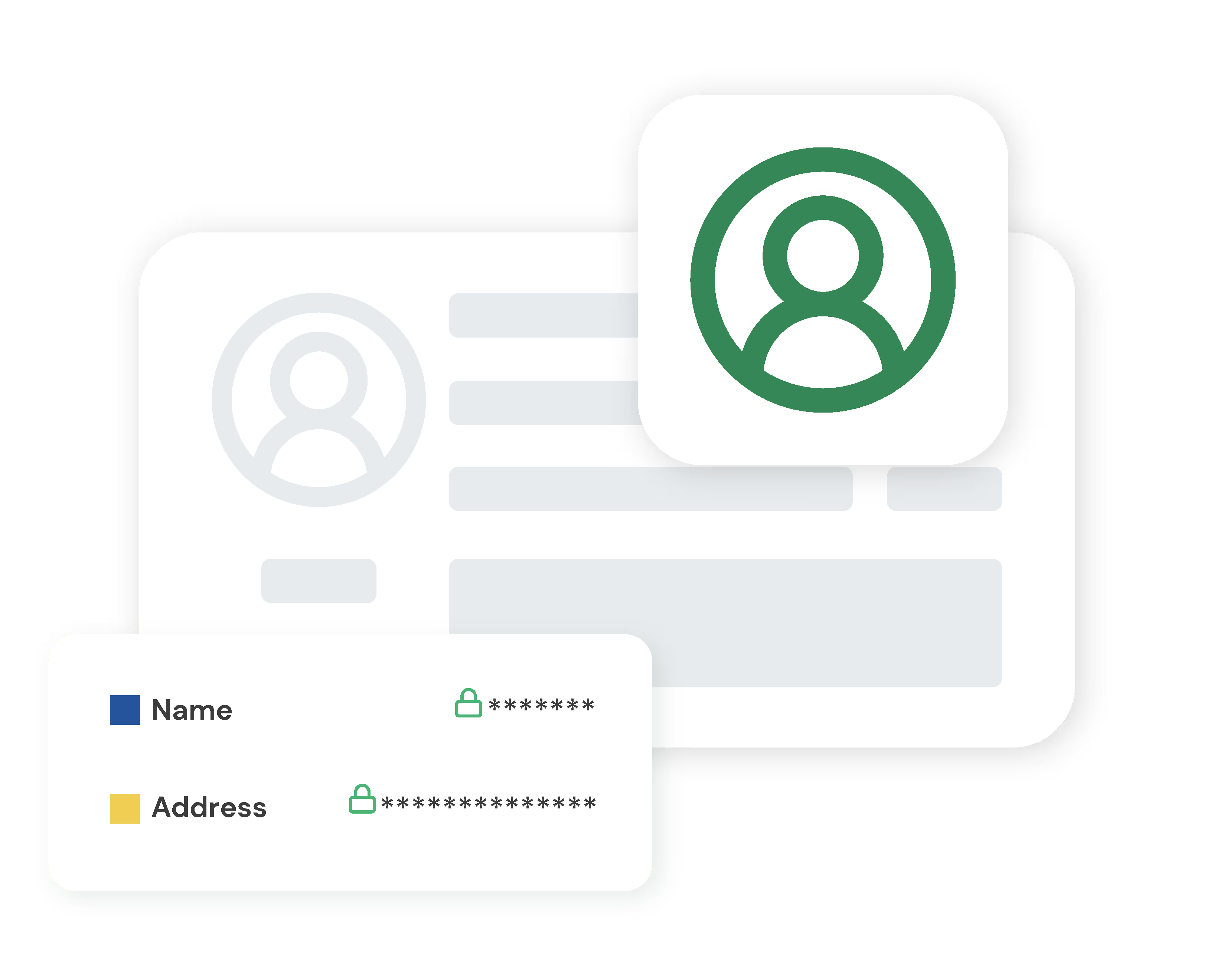
Names, addresses, dates of birth, government identifiers.

Proprietary documents such as internal models, algorithms, contracts, or sensitive operational data.
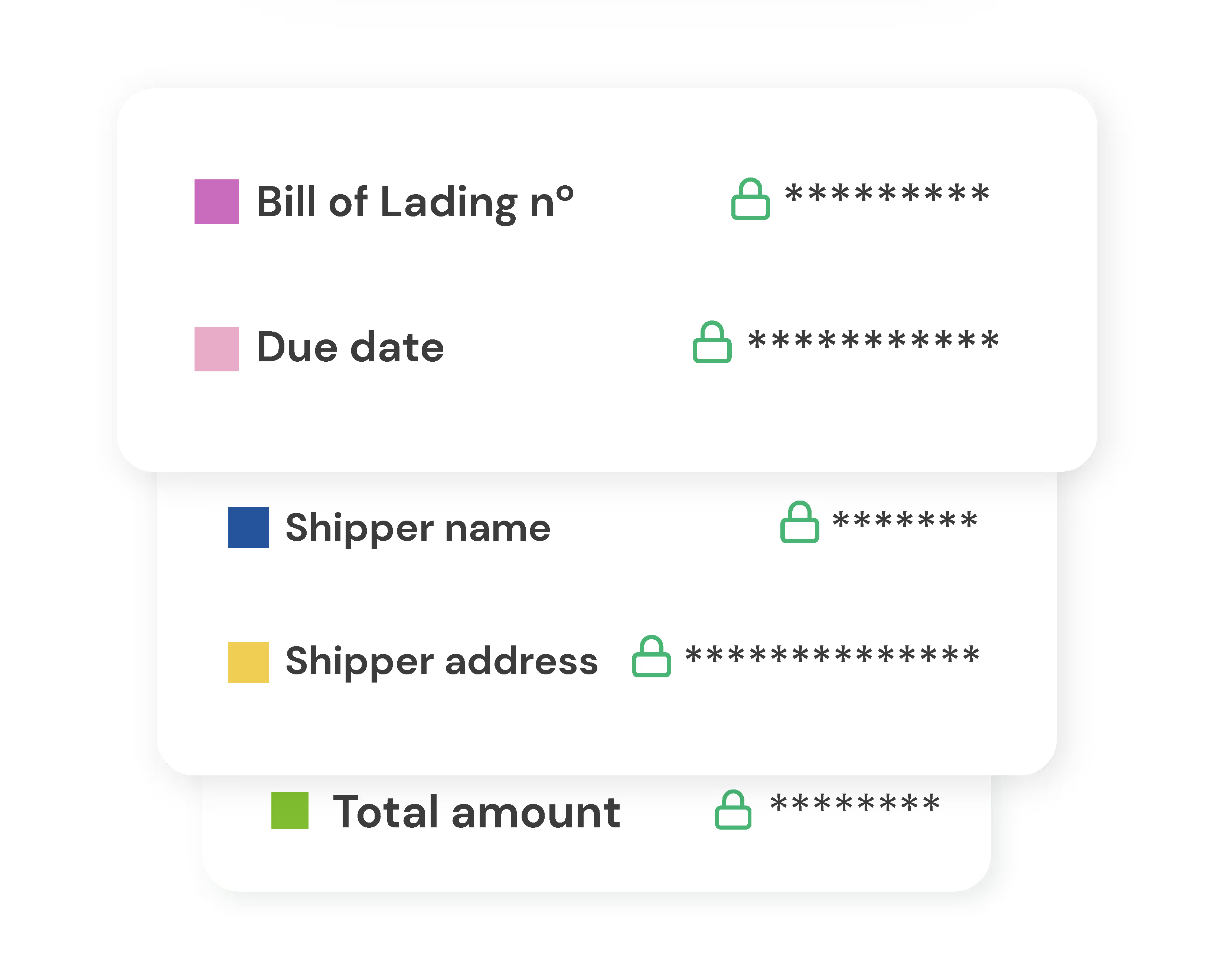
Where internal policy or regulation prohibits data storage outright.
In these cases, minimizing data exposure takes precedence long-term optimization.
Zero retention processing is a fully supported capability within Invofox for environments with strict data handling requirements.

Files are ingested and parsed in real time.

Only the fields defined by your workflow are captured and returned.

(when approved)
Customers may explicitly provide a limited set of sample documents for training or evaluation purposes, which are retained only as part of the agreed training dataset.

No documents, extracted data, logs, or processing artifacts are retained or reused.
Once processing is complete, no customer documents remain on our end beyond the explicitly approved training samples.
Zero retention reduces data exposure, but it changes how optimization and analysis work.
These differences are expected in zero-retention environments and are supported by Invofox workflows.
To continue improving accuracy in zero-retention deployments, Invofox supports optimization through synthetic datasets or explicitly approved customer-provided samples, rather than previously processed production documents.
Zero retention processing is configured internally and evaluated based on document processing scale.
Because documents are not retained, certain capabilities that rely on historical data are not available:
No historical document analysis
Past processing results cannot be reviewed to identify trends, anomalies, or systemic issues.

No backward debugging on past documents
If an issue is discovered later, previously processed documents cannot be reviewed to determine root cause.

Limited model optimization using real production data
Continuous learning from real-world documents is constrained when data is not retained.
Invofox works with teams across regulated, security-sensitive, and IP-critical environments to deploy zero retention processing safely and successfully.
If strict data deletion guarantees are required, we’ll help assess the right approach and deployment model.


